|
GCSE level Physics exam revision notes
Thermal energy & particle theory: Part 4.7
Everyday examples of using latent heat
- ice cooling drinks, refrigerator, sweating AND specific latent heat calculations
[Author
©
Dr Phil Brown GRIC, PhD:
Doc Brown's physics exam revision notes suitable for students of UK
IGCSE & GCSE level physics courses, ~ US grades 9-10 physics
[heat-4- page updated
RE-EDIT]
[KEY
POINTS and learning objectives for this page, after initial notes]
INDEX of notes on particle model theory,
state changes, latent heat, heating & cooling curves
email doc
brown: problems?, comments? query?
*
[privacy & cookies policies & disclaimer]
This page contains some online questions
for you to do.
Jot down your answers. check against worked out answers at the end of
the page
4.7a Some everyday examples of latent
heat - internal energy transfers
-
Whenever materials at different
temperatures are placed in contact with each other, there will be an
internal energy transfer of thermal energy from the hotter material to the
colder material.
-
(1)
Using ice to cool a drink
-
When you add ice to a drink to cool it,
an internal energy change takes place involving the latent heat of
melting.
-
The ice is at a lower temperature than
the liquid drink.
-
The higher energy liquid particles
transfer kinetic energy to the ice, increasing its internal energy.
-
Sufficient thermal energy - the latent
heat of melting, is absorbed by the ice to melt it.
-
The energy is needed to weaken the
intermolecular forces between the water molecules in the ice
sufficiently to cause melting - when the particles have sufficient energy to
break free from the inter-particle attractive forces.
-
The ice warms up and your drink cools
down - an internal thermal energy transfer!
-
(2) How a refrigerator works and how sweat cools the body
-
In a refrigeration the refrigerant gas is compressed
by an electric pump to a
liquid and the latent heat is released and transferred through heat
exchanger tubes/fins at the back of the fridge.
-
The compressed liquid is pumped around in copper tubing in
the inner panelling of the refrigerant or where it evaporates, absorbing the
latent heat of evaporation/vapourisation.
-
The internal energy of the
fridge or freezer
contents is reduced, lowering the temperature of the food.
-
This completes the cycle of removing thermal (heat) energy
from inside the refrigerator or freezer to the outside air - that's why you can feel
warm air at the back of a refrigerator.
-
This is also how heat
pumps work to transfer heat energy from outside a house into a house.
-
If your body feels too
hot, you tend to sweat.
-
When the water of sweat
evaporates from your skin it absorbs the latent heat of vapourisation so
cooling the surface of your body.
-
So more thermal energy is
lost from your blood streams close to your skin, so you feel cooler.
4.7b
Defining specific latent heat
-
The specific latent heat of a
substance is the quantity of energy need to change 1 kg of the material
from one state to another without change in temperature.
-
(a) In heating a material to effect a
state change e.g. melting or boiling, the specific latent heat must be
added.
-
(b) In cooling a material to effect a
state change e.g. condensing or freezing, the specific latent heat must
be removed (released) from the system.
-
Specific latent heat values differ
from substance to substance because of different values of
inter-particle forces (intermolecular bonding) and also the state change
itself for a specific substance (solid <=> liquid OR liquid<=> gas).
-
Generally speaking latent heats of
boiling/condensing are numerical much greater than latent heats of
melting/freezing.
-
The latent heat for the state changes
solid <=> liquid is called the specific latent heat of fusion
(for melting or freezing).
-
The latent heat for the state changes
liquid <=> gas is called the specific latent heat of
vaporisation (for condensing, evaporation or boiling)
-
Specific
heat capacity is dealt with on separate pages
4.7c
Examples of worked-out specific latent heat
calculations
INDEX of notes on Particle model theory
state changes and latent heat
Key revision points
Thermal energy & particle models - latent heat and calculations
Information
sources for Doc Brown's key points: IGCSE-GCSE physics are based on
textbooks & syllabus-specifications for students taking the UK AQA, Edexcel,
OCR 21st Century Science, OCR Gateway science suite, WJEC, CCEA and CIE GCSE
physics 9-1 level science examinations
A structured and exam-board-inclusive set of
summary revision notes on
Everyday Applications
and Calculations of Latent Heat, tailored for
GCSE/IGCSE Physics students across
WJEC, CCEA, CIE,
AQA, Edexcel, and OCR.
What Is Latent Heat?
- Latent heat is the energy required to
change the state of a substance without changing
its temperature.
- It’s “latent” because the temperature stays constant during the
process - the energy goes into breaking or forming bonds.
Examples of Types of Latent Heat
| Type |
State Change |
Example
(this applies to both directions) |
| Fusion |
Solid ↔ Liquid |
Melting ice or the
reverse, freezing water |
| Vapourisation |
Liquid ↔ Gas |
Boiling water or the
reverse, condensing steam |
Calculating Latent Heat
Formula:
Q = m L
Where:
- Q = thermal energy (Joules)
transferred in state change
- m = mass (kg) of material changing
sate
- L = specific latent heat (J/kg) of
a particular substance undergoing a state change
Example Calculation
How much energy is needed to melt 0.5 kg of ice?
Given: L = 334,000 J/kg
Q = 0.5 x 334,000 = 167,000 J (167 kJ)
Everyday Applications of Latent Heat
Domestic & Industrial Uses of
latent heat
- Refrigeration & Freezers: Use latent heat
during evaporation of coolant to absorb heat.
- Air Conditioning: Coolants absorb latent heat
as they evaporate, cooling the air.
- Sweating: Evaporation of sweat absorbs latent
heat from skin → cooling effect.
- Steam Heating Systems: Steam releases latent
heat when condensing → warms surroundings.
- Cooking: Boiling water uses latent heat to
convert liquid to steam without temperature rise.
- Melting Ice Packs: Absorb latent heat from
injuries → reduce swelling.
Scientific
and Engineering Latent
Heat Contexts
- Thermal Energy Storage: Phase change materials
store/release latent heat for temperature regulation.
- Climate Systems: Evaporation and condensation
in weather systems involve massive latent heat transfers.
- Cryogenics: Managing latent heat during
liquefaction of gases.
Required Knowledge by All Exam Boards
- Understanding of latent heat and
specific latent heat
- Use of Q = mL in calculations
- Interpretation of
heating/cooling curves
- Explanation of
energy transfers during state changes
- Awareness of
real-world applications
Exam Tips for latent heat and
calculations
- Always state that temperature remains constant
during state change.
- Use correct units: J (energy), kg (mass), J/kg (latent heat).
- Know the difference between latent heat and
specific heat capacity know both formulae.
- Be ready to rearrange the formula ( Q = mL )
to solve for any variable.
- Link energy transfer to
intermolecular bond
breaking/forming, not temperature change.
Common Misconceptions about latent heat
- Temperature increases during melting/boiling
→ It does not.
- Latent heat causes temperature rise → It
causes state change, not temperature change.
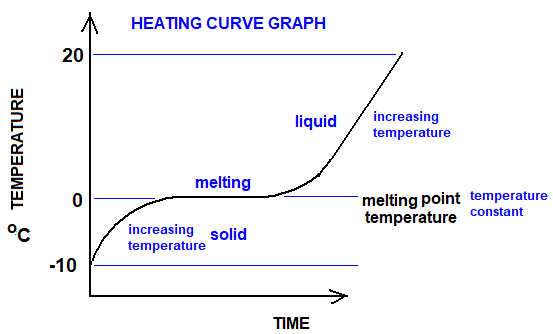
- No energy transfer during flat sections of heating
curve → Energy is transferred, just not as temperature.
- Latent heat is the same for all substances →
It varies by material and state change.
Keywords, phrases and learning objectives for
thermal energy, uses of latent heat
and specific latent heat calculation questions
Be able to explain how a r efrigerator works in terms of latent
heat.
Know and explain the latent heat changes when water is cooled to make
ice.
Be able to do specific latent heat calculations given appropriate data
e.g. applying to state changes.
WHAT NEXT?
TOP of page
INDEX of notes on particle model theory,
state changes, latent heat, heating & cooling curves
INDEX of all my THERMAL ENERGY notes
Revision notes on everyday examples of
using latent heat based on the syllabus-specifications
for students taking IGCSE/GCSE level physics examinations, summary
revision notes and key points on everyday examples of using latent heat for students taking the AQA
igcse/gcse physics notes on everyday examples of using latent heat, Edexcel gcse
physics notes on everyday examples of using latent heat, OCR 21st century GCSE
physics notes on everyday examples of using latent heat, OCR gateway
GCSE physics notes on everyday examples of using latent heat, WJEC gcse physics notes on
everyday examples of using latent heat, CCEA
gcse physics notes on everyday examples of using latent heat for students taking CIE Cambridge igcse
physics, exam revision notes on
everyday examples of using latent heat, useful for US grade 9-10 physics courses,
importance of how to do latent heat
calculations
in GCSE level physics, What you need to know about how to do latent heat
calculations for
GCSE level
physics,
Explaining the use of how to do latent heat calculations knowledge in GCSE level physics, Examples of
how to do latent heat calculations explained
when studying GCSE level physics, What is
significant about how to do latent heat calculations, describing the theory of
how to do latent heat calculations when studying
GCSE level physics, revision notes for how to do latent heat
calculations in exams, online exam help
for how to do latent heat calculations, revision notes about how to do
latent heat calculations, what do I need to learn about how to do
latent heat calculations for
by GCSE physics exam?
help to understand the how to do latent heat calculations topic in preparation for GCSE physics exam
question, how to
prepare for questions involving how to do latent heat calculations in a GCSE physics examination?
SITEMAP
Website content © Dr
Phil Brown 2000+. All copyrights reserved on Doc Brown's physics revision notes, images,
quizzes, worksheets etc. Copying of website material is NOT
permitted. Exam revision summaries and references to GCSE science course specifications
are unofficial.
|
Worked out
ANSWERS
to the velocity-graph questions
INDEX of notes on Particle model theory
state changes and latent heat
|